
MEDICAL COURIER
How I Used a Rental Car for Medical Courier Contracts (Without Wasting Money)
by Leelah B · September 18, 2026 · 6 min read
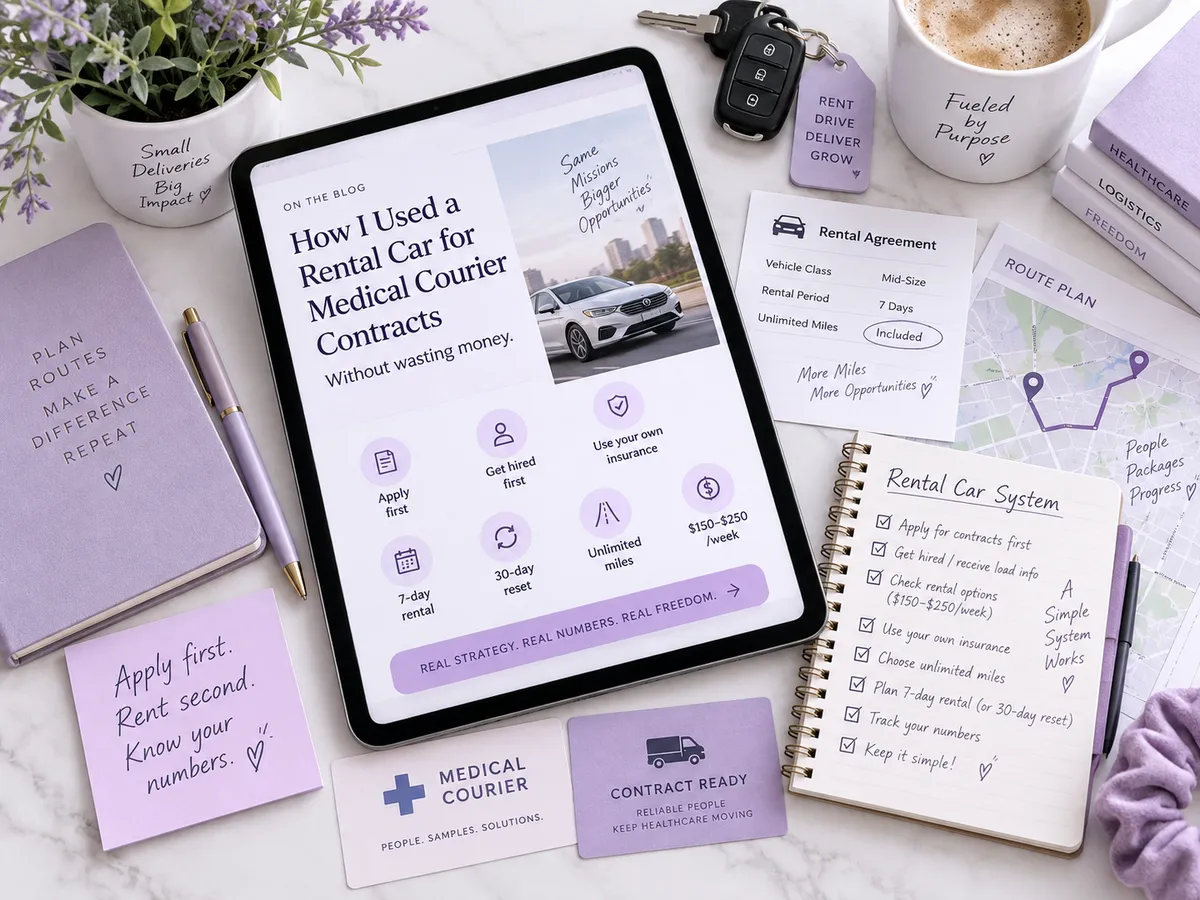
I Didn’t Rent a Car Because My Own Car Wasn’t Good Enough
Most of my medical courier and courier journey was driven in a rental car — not my own vehicle.
Not because my car couldn’t handle it. Not because a contract required it.
I chose to rent on purpose. I didn’t want the wear and tear on my own car, and I didn’t want to think about maintenance while I was trying to run a business. Renting also meant I could stay in a newer, cleaner vehicle consistently instead of putting all of that mileage on something I owned.
That’s when I built out a system — apply, get hired, then rent — and stuck with it for most of my time doing medical courier and courier contracts.
In this blog, I’m breaking down exactly how I did it: the order of operations, the rental company I use, how I handled insurance, and what it actually cost me.
🎥 Prefer to Watch Instead?
Watch My Full Rental Car Breakdown →
🚗The Biggest Mistake New Couriers Make With Rentals
A lot of people hear that you can use a rental car for medical courier contracts and go rent one immediately — before they’ve applied anywhere, before they’ve been hired, before they know if they even have work coming in.
That’s backwards, and it’s the single biggest mistake I see.
I never rented a car with no contracts in sight. I applied and got hired using my own vehicle first. The rental only came after.
Here’s exactly how I did it, step by step.
📈Step-by-Step: How I Used a Rental Car for Medical Courier Contracts
Step 1: Apply and Get Hired With Your Own Vehicle First
Apply for medical courier and courier contracts using the vehicle you already have. Get hired first.
Once you’re actually hired, that’s when you ask the employer if you can use a rental car instead of your own. Every company I’ve worked with said yes — but I always asked after I had the contract, never before.
Step 2: Choose the Right Rental Company
I’ve only ever used Hertz for this, and it’s the only company I recommend for medical courier, courier or independent contracting work. I haven’t rented through other companies or used something like Turo for this, so I can’t speak to how those handle it — but Hertz has worked for me consistently enough that I’ve never had a reason to switch.
What I look for in the rental itself:
Sedan or bigger — the minimum most medical courier and courier contracts expect
Clean — non-negotiable, you’re representing a business
Unlimited miles — medical courier routes rack up mileage fast, and a capped-mileage rental will eat your profit in overage fees
Want More Courier Company Options? Inside my Medical Courier Starter Kit, I give you a list of 140+ courier and delivery apps and companies to research.
Step 3: Handle Insurance the Smart Way
I never paid for the rental company’s own insurance add-on. I use my personal auto policy through Geico, which is full coverage and covers rental cars for up to 30 days. Instead of paying extra for insurance on top of the rental price, I used coverage I was already paying for every month.
Insurance policies aren’t all built the same, so before you skip a rental company’s insurance the way I did, confirm with your own provider that your policy actually covers a rental car for the way you’ll be using it. Don’t assume your policy works the same way mine does — call and ask.
Step 4: Use 2–3 Delivery Apps at the Same Time
This was another major part of my strategy.
I didn’t rely on one delivery platform.
I used multiple apps so I had more opportunities coming in throughout the day.
A few courier and delivery platforms you can research include:
Here’s exactly how I structured it:
Rent for 7 days.
Renew that same rental every week.
Once you hit the 30-day mark, close it out and make a brand-new reservation for another 7 days.
Repeat.
The 30-day reset isn’t random — it’s timed to match the 30-day window my Geico policy covers a rental car under my own insurance. Staying inside that window is what let me skip paying for the rental company’s insurance every single time.
Step 5: Know Your Numbers Before You Rent
My rentals ran about $150–$250 a week, which works out to roughly $20–$30 a day. I covered that daily cost by running one extra medical courier or courier app route — it paid for itself the same day, not a separate expense I had to budget around.
Renting only makes sense if you already have a full schedule of contracts. If you don’t have consistent work lined up, don’t rent a vehicle — full stop.
Want Help Deciding If Renting Makes Sense for You?
👉 GRAB MY FREE RESOURCE HERE →

💬 Want Help Getting Started?
Get hired before you rent. The rental should follow the contract, never the other way around.
Stick with a rental company that actually works. I’ve only used Hertz and never had a reason to test others.
Use the insurance you already have. Check your own policy before paying extra for the rental company’s coverage.
Time your rental cadence to your insurance window. Mine resets every 30 days because that’s what my policy covers.
Know your daily number. If one extra route can’t cover a day’s rental, you’re not ready to rent yet.
Be transparent with employers. I asked every company directly, after I was hired, whether a rental car was okay — every one of them said yes.
💰 Is Renting Really Worth It?
For me, yes — it kept the wear and tear off my own car and let me stay in something newer and cleaner consistently.
But I want to be clear about something: my results are my results, not a guarantee. What renting costs you, and whether it makes sense, depends on your market, your contracts, your insurance policy, and how consistently you’re running routes.
The takeaway isn’t “go rent a car.” It’s: get your contracts lined up first, know your daily numbers, and only rent once the math actually works in your favor.
Start Your Medical Courier Journey
If you're wondering where to go from here, I've already created a free Medical Courier Certification Resource that shows you where to start with HIPAA certification and the basic certifications you may see when applying for medical courier work.
📦Medical Courier Starter Kit — $27
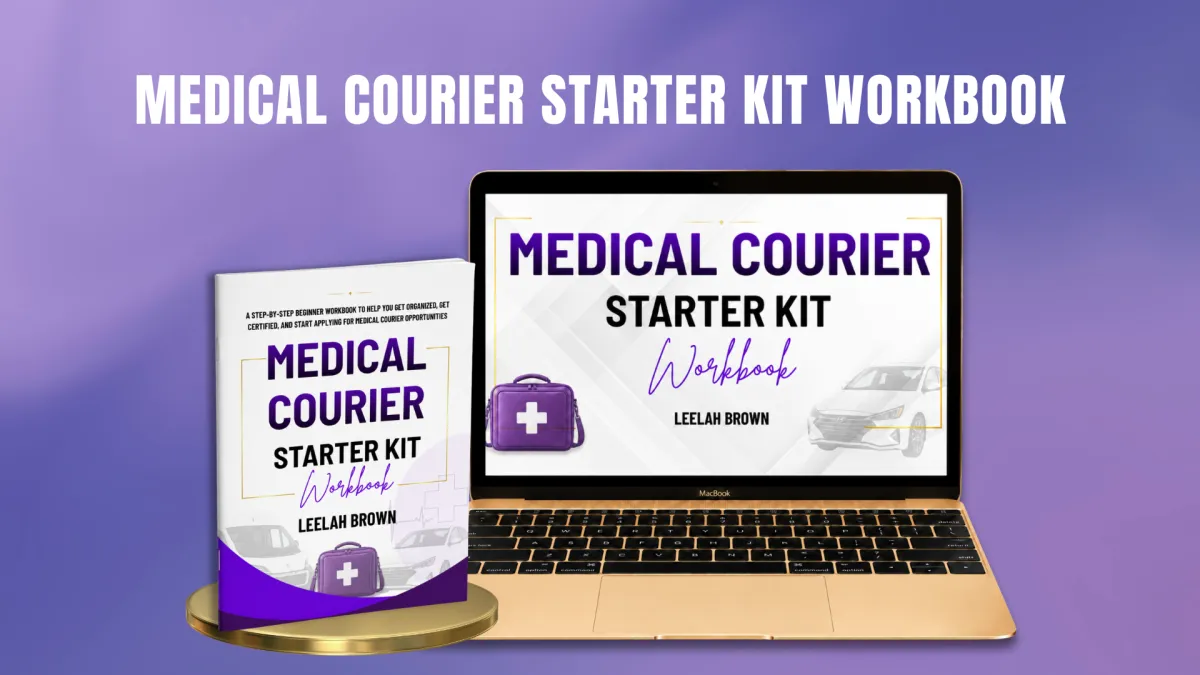
Want everything in one place? My Medical Courier Starter Kit includes:
2,000+ medical courier and delivery leads
140+ courier and delivery apps
Medical courier startup information
Resources to help you find opportunities
Tools to help you start building your courier business
🧠Conclusion: Apply First, Rent Second, Know Your Numbers
Most of my medical courier journey ran on a rental car, and it worked because I never got the order backwards. I applied and got hired with my own vehicle first. I only rented once I had contracts lined up. I used insurance I already had instead of paying extra. And I knew exactly what the rental needed to earn back every single day.
That’s the whole system. Get the contracts. Then get the car.
ALREADY READY TO BID IN YOUR BUSINESS NAME?
Let my Government Contracting Bundle help you find, bid, and land contracts — without guessing your way through it
The Government Contracting Bundle gives you the tools, templates, and training to help you find opportunities, negotiate with confidence, write stronger bids, and position your business to win — without trying to piece it all together on your own.

Written By
Leelah B
I started using courier routes as a way to generate additional income and help fund another business. What began behind the wheel eventually grew into medical courier services, medical supplies, direct opportunities, and private and government contracts.
Now I share what I learned to help other entrepreneurs understand how to start with courier work — and eventually build beyond it.
More About Me →
Keep Reading
All Posts →
Start your search with medical courier companies that hire drivers and independent contractors throughout different parts of the country.

Medical Courier
How I Made Over $9K in 21 Days Driving as a Courier & Medical Courier
I wasn’t trying to make $9K in 21 days. I was just trying to help fund another business. Here’s how applying consistently, using multiple apps, and showing up every day added up fast.

Medical Courier Jobs
5 Medical Courier Companies You Can Apply to Today
You don’t have to spend hours figuring out where to apply. Here are five medical courier companies you can start checking out today.

Courier Apps
140+ Courier Apps: Why I Never Relied on Just One
One app can be dead while another one is sending work back to back. That’s why I never depended on just one.
FREE DOWNLOAD
Want to Get Medical Courier Certified?
I've put together a free resource showing you where to start with HIPAA certification and other common medical courier training requirements so you can start getting yourself ready to apply.


